2026.09.11
 News
News
A cable tie may look identical regardless of which cavity produces it, but a high-cavity mold can create subtle differences between parts. As cavity numbers increase, the runner system becomes more complex, and variations in filling pressure, melt temperature, gate resistance, and cooling conditions can influence the final cable tie.
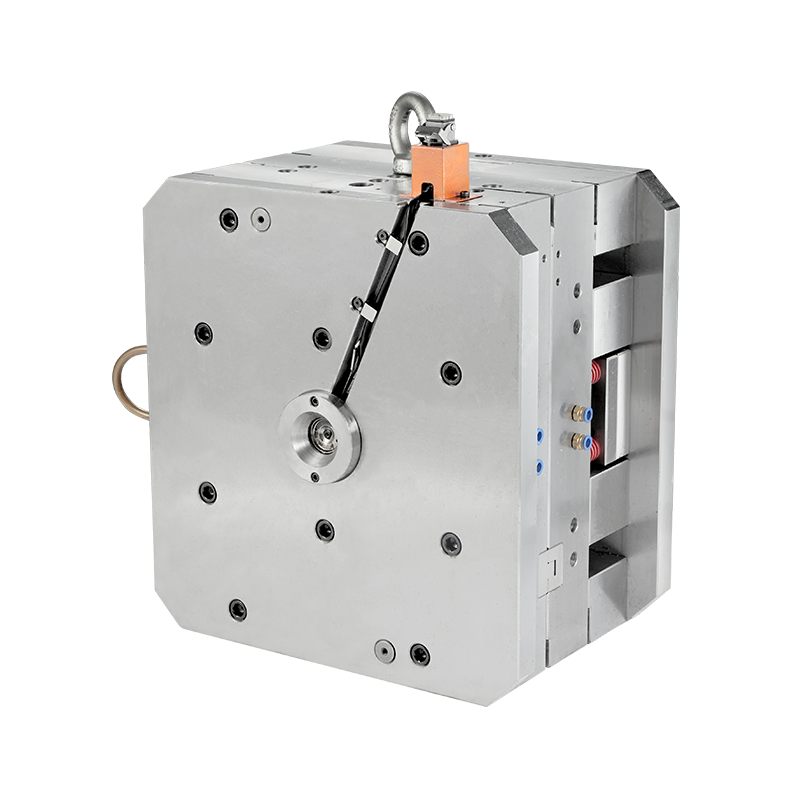
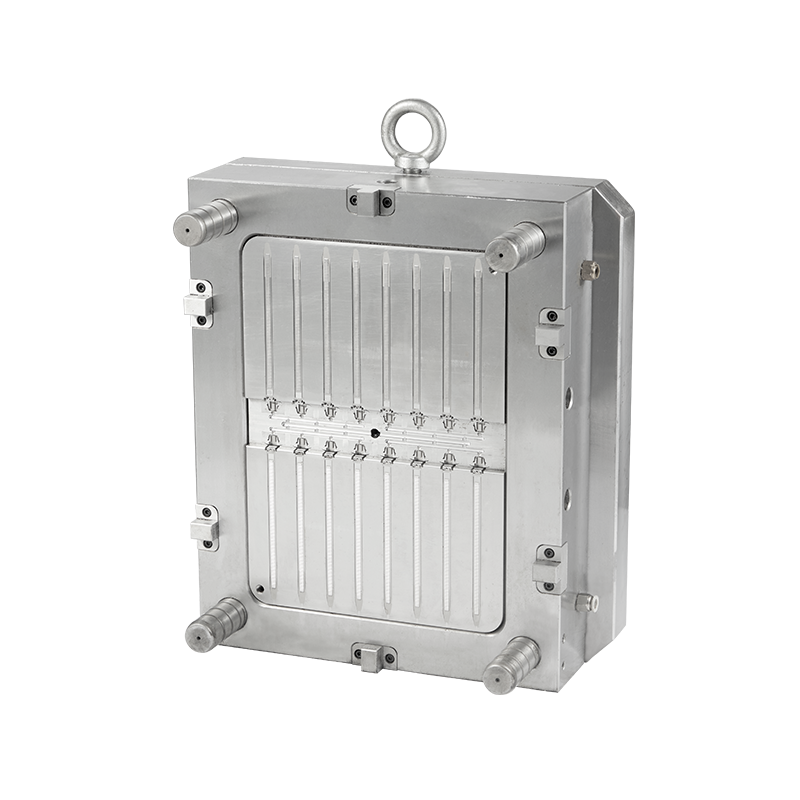
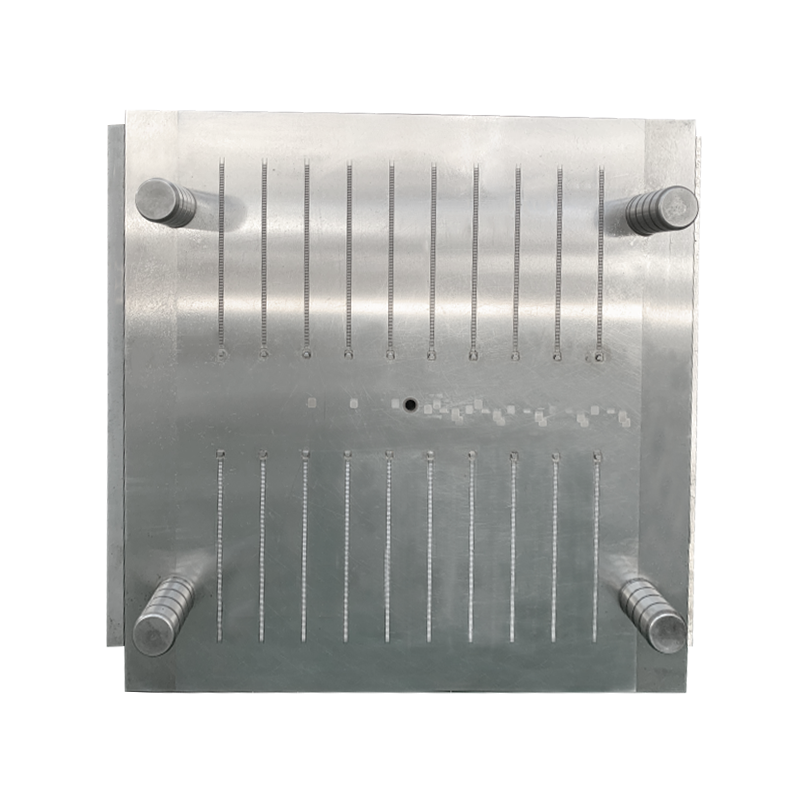
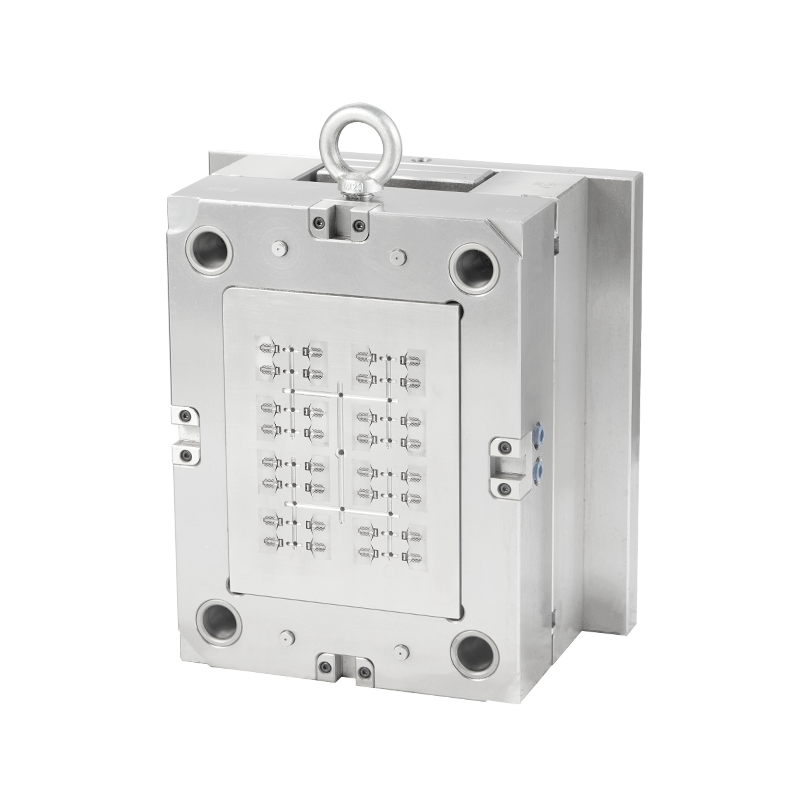
This is why the design of a Multi Cavity Cable Tie Injection Mold is not simply about adding more cavities. The relationship between cavity count and flow balance can have a direct effect on tooth geometry, locking head dimensions, strap thickness, part weight, and tensile behavior.
A four-cavity mold has relatively short and simple flow paths. A 32-, 48-, or 64-cavity cable tie mold requires a much larger runner network to distribute molten nylon to every cavity.
| Cavity Count | Design Consideration | Potential Consistency Concern |
| 4–8 | Shorter runner network | Gate and cavity balance |
| 16–32 | Multiple runner branches | Pressure and temperature differences |
| 48–64 | Complex distribution system | Cavity-to-cavity dimensional variation |
Research on multi-cavity injection molding shows that even geometrically balanced layouts can experience filling imbalance because melt temperature and viscosity can vary within the runner system. Runner and gate dimensions are therefore important variables rather than secondary details.
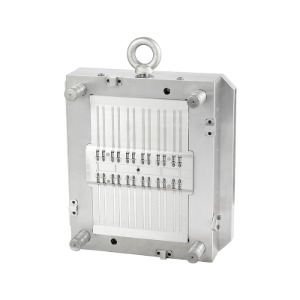
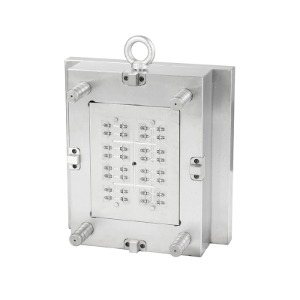
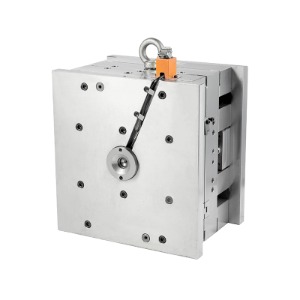
The runner system determines how molten plastic travels from the sprue toward individual cable tie cavities. A balanced layout aims to provide comparable flow paths, pressure conditions, and filling times.
Avient notes that balanced runner configurations are important for maintaining uniform quality from cavity to cavity, while an unbalanced system can produce differences in part weight and dimensions.
Not necessarily. A higher cavity count increases the engineering challenge, but cavity number alone does not determine product consistency.
A carefully engineered Multi Cavity Cable Tie Injection Mold can use a balanced runner arrangement, appropriate gate dimensions, mold-flow analysis, and controlled cooling to maintain similar molding conditions across cavities.
The opposite situation can also occur: a smaller mold with poorly balanced runners may produce greater cavity-to-cavity differences than a well-designed high-cavity tool.
Modern mold-flow analysis can help identify filling differences before the tool enters production. Studies have found that simulation results can correspond with experimental filling behavior and help evaluate runner-related imbalance.
Cable ties contain several functional features that require dimensional control. The strap, locking head, rack teeth, and internal pawl must work together after molding.
For a cable tie with a strap width around 4.8 mm, even a small dimensional difference in the head or tooth profile can become noticeable during assembly or tensile testing. Cable tie mold references commonly emphasize tight control of the locking mechanism because the pawl and rack teeth must engage correctly.
Gate size and position influence the amount of pressure required to fill each cavity. A restrictive gate creates greater resistance, while a larger gate allows melt to enter the cavity more easily.
| Gate Variable | Possible Effect |
| Gate size | Changes flow resistance and pressure drop |
| Gate location | Changes filling direction and flow length |
| Gate land | Influences local restriction and freeze behavior |
| Gate consistency | Helps maintain similar conditions between cavities |
Experimental research on multi-cavity molds has demonstrated that runner size, gate size, and polymer viscosity can influence filling imbalance. Smaller runner and gate dimensions can increase filling differences under certain molding conditions.
A cavity-by-cavity inspection provides more useful information than checking only the overall appearance of the cable ties.
Cavity-to-cavity consistency should be evaluated through measurable characteristics rather than appearance alone. Scientific molding references identify cavity-to-cavity variation as an important consistency category, with runner balance, gate dimensions, venting, cooling, and cavity steel among the factors that can contribute to differences.
A 64-cavity Multi Cavity Cable Tie Injection Mold generally requires more detailed runner distribution and cavity arrangement than a four- or eight-cavity tool.
The designer needs to consider the complete melt path from the sprue to every gate. A geometric layout may appear symmetrical on the drawing, yet thermal and rheological effects can still produce uneven filling. Research on eight-cavity molds has demonstrated that geometric balance does not automatically eliminate filling imbalance.
This makes flow simulation, gate analysis, cavity numbering, and trial measurements valuable during tool development.
Cavity count can influence cable tie consistency, but the relationship is controlled by the complete mold architecture rather than the number printed on the mold specification sheet.
A reliable Multi Cavity Cable Tie Injection Mold needs coordinated control of runner geometry, gate dimensions, filling behavior, cooling, and cavity design. As the number of cavities increases from 8 to 32, 48, or 64, these relationships become increasingly important because a small imbalance can affect a larger group of finished parts.
For cable ties, consistency matters particularly around the locking head, rack teeth, strap dimensions, and tensile performance. Reviewing these characteristics cavity by cavity can reveal differences that a simple visual inspection may miss.
Recommended Products



 English
 中文简体
中文简体 русский