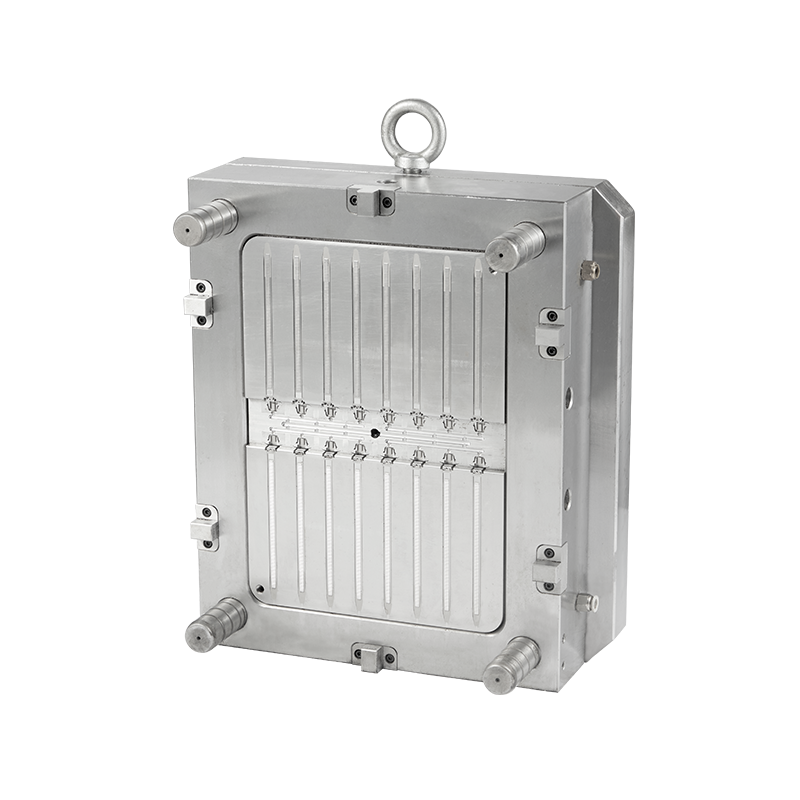
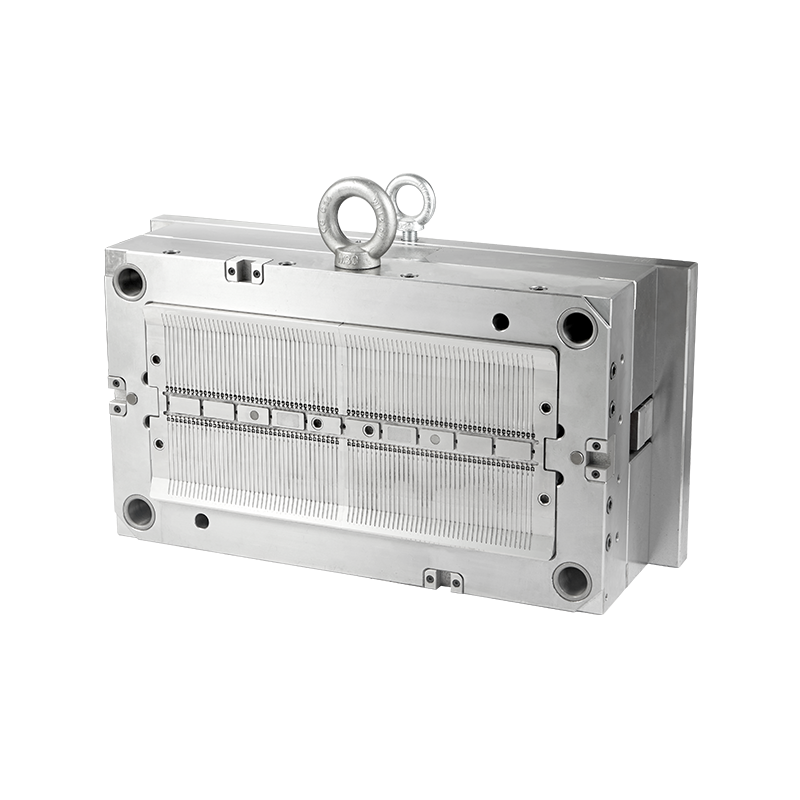
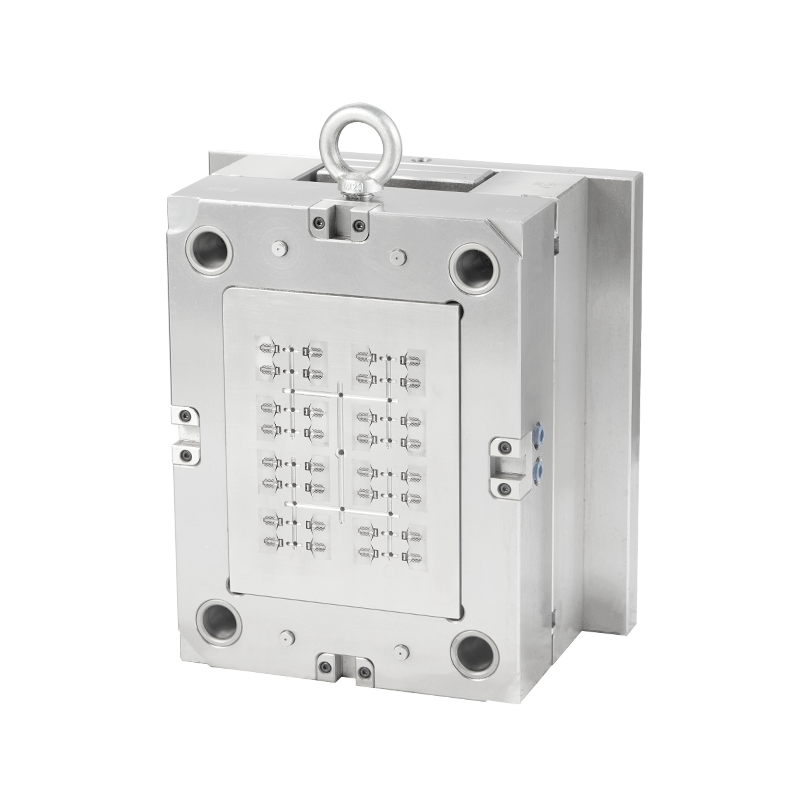
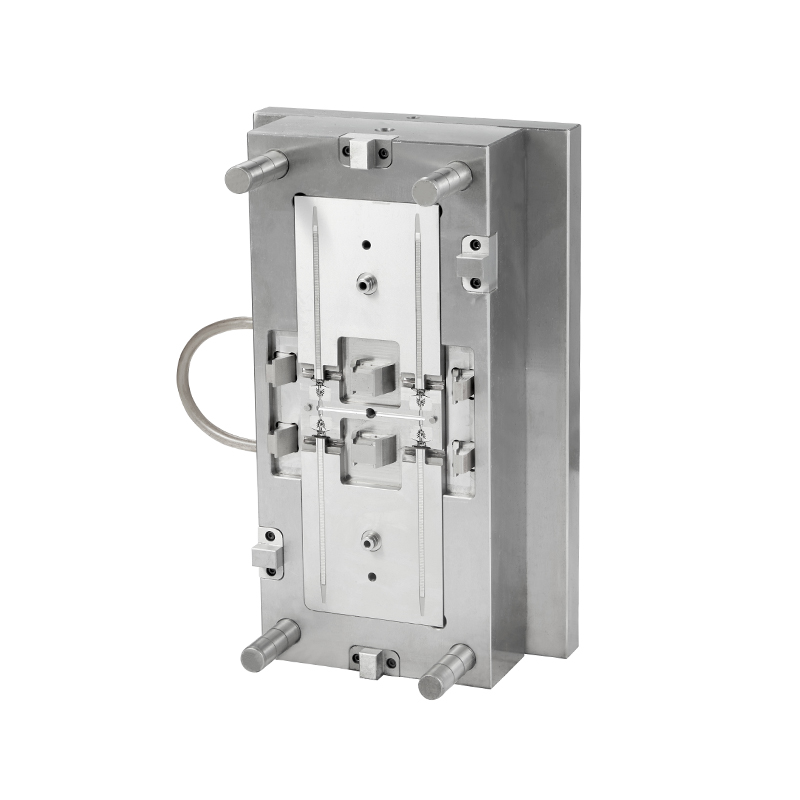
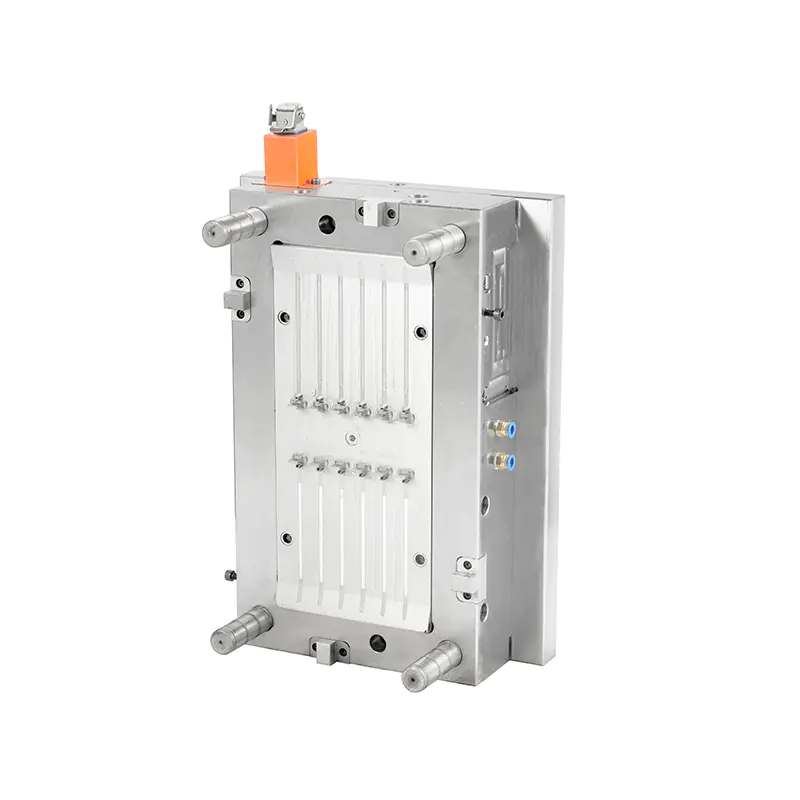
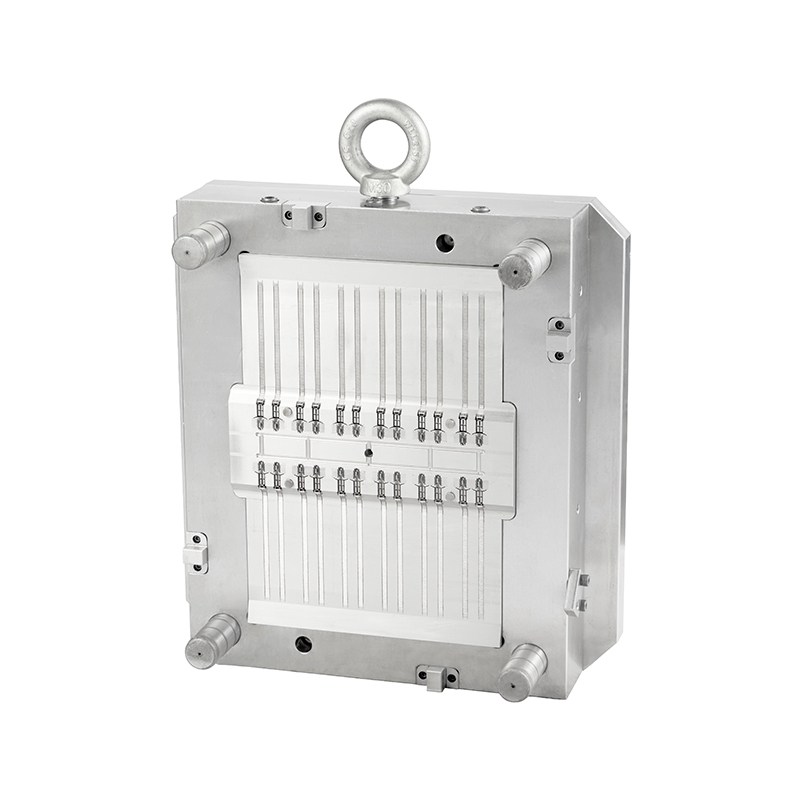
The locking mechanism—the interface between the pawl (a flexible projection inside the head) and the rack teeth along the strap—is the most demanding feature to cable tie mold. Three design parameters determine reliability.
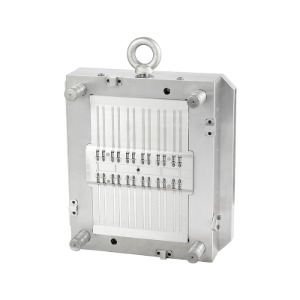
- Pawl thickness and undercut: The pawl is an integral hinged feature that must flex when the strap is inserted. For a standard 4.8 mm wide cable tie (used for general bundling), pawl thickness ranges from 0.35 mm to 0.55 mm. The mold creates this feature using a side-action core or a collapsible core that retracts before ejection. Without a side-action, the pawl would lock into the head and prevent part ejection. The undercut depth (distance the pawl extends into the head opening) is typically 0.6–1.2 mm. The mold's side-action mechanism moves 3–6 mm perpendicular to the main parting line. For a 64-cavity mold, 64 side-action cores must move simultaneously, requiring a common actuation plate driven by hydraulic or pneumatic cylinders. Actuation force required: 500–1,500 N per cavity, total 32–96 kN.
- Rack tooth geometry: The strap's teeth have a sawtooth profile with a steep face (locking face) and a shallow ramp (insertion face). The locking face angle is 75–85 degrees from the strap axis; the ramp face is 25–35 degrees. Tooth pitch for standard ties is 0.8–1.2 mm; tooth height is 0.25–0.45 mm. The mold cavity for the teeth must be cut with a form cutter or by wire EDM. Surface finish of tooth faces requires SPI B-1 (0.05–0.10 µm Ra) to allow smooth insertion and reliable locking. A rougher finish (above 0.2 µm Ra) increases insertion force by 30–50% and reduces locking reliability because the pawl cannot seat fully against the tooth face.
What defects are specific to cable tie molding, and how are they prevented?
- Weak or missing pawl (locking failure): The pawl does not engage the rack teeth, allowing the tie to loosen after tension is applied. Causes: insufficient injection pressure at the pawl region (below 80 MPa); pawl thickness below 0.30 mm due to worn side-action core; or melt temperature too high (above 320°C for nylon 6/6) causing polymer degradation and brittleness. Prevention: monitor cavity pressure at the pawl location using a pressure transducer (target 80–120 MPa); measure pawl thickness in every cavity every 1,000 cycles using a laser micrometer (tolerance ±0.02 mm) ; reduce melt temperature to 290–305°C. A missing pawl affects 1–5% of parts from a worn mold (over 2 million cycles) versus 0.1–0.5% from a new mold.
- Incomplete tooth formation (missing or rounded teeth): The rack teeth have low height (0.3 mm) and are located at the far end of the flow path. Air trapped at the tooth tips prevents plastic from filling. Prevention: add venting channels (0.02–0.03 mm depth) at the tip of each tooth. A mold with 1.0 mm tooth pitch requires 8–12 vents per tooth row. For a 64-cavity mold producing 150 mm ties, a total of 10,000–15,000 venting positions may be necessary. Automated vent cleaning (using compressed air or ultrasonic cleaning every 10,000–20,000 cycles) prevents clogging. With proper venting, incomplete teeth occur at 0.2–1.0% rate; with clogged vents, rates rise to 5–15%.
- Flash at the locking head or strap edge: Excess plastic escapes between mold parting lines. For cable ties, flash at the head interferes with strap insertion into the head opening. Causes: worn parting line surfaces (wear exceeding 0.03 mm); insufficient clamping force for the projected area (a 64-cavity mold with 8 cm² per cavity has 512 cm² total, requiring 250–400 tonnes clamping); or high injection pressure (above 180 MPa). Prevention: measure parting line flatness every 200,000 cycles; regrind when wear exceeds 0.02 mm over a 300 mm span. Flash thickness below 0.10 mm is acceptable for many applications; above 0.15 mm requires maintenance.
- Brittle strap (breaks at low tension load): Cable ties made from nylon 6/6 should achieve 80–100% of rated tensile strength (e.g., 220 N for a 4.8 mm wide standard tie). Brittle ties fail at 40–60% of rated strength. Causes: material dried insufficiently (nylon 6/6 requires a moisture content below 0.2% before molding; above 0.4% causes hydrolytic degradation); melt residence time too long (exceeding 8–10 minutes); or melt temperature too high (above 320°C). Prevention: measure resin moisture with a hygrometer before each production shift; verify residence time by calculating shot weight vs. machine barrel capacity (shot weight should be 30–70% of barrel capacity). A brittle batch (5,000 parts) may require full rejection if the failure load is below specification.
What material and drying requirements are essential for cable tie molding?
Nylon 6/6 absorbs moisture from the atmosphere—up to 2–3% by weight at 50% relative humidity. Before injection molding, the resin must be dried to below 0.2% moisture. Drying conditions: 80–90°C for 4–6 hours in a desiccant dryer (not a hot air oven, which cannot achieve -40°C dew point). Resin with 0.3–0.5% moisture produces parts with splay marks (silver streaks) on the surface and tensile strength reduced by 15–25%. Resin with >0.5% moisture causes hydrolytic degradation: the polymer chains break, reducing tensile strength by 40–60%. Molecular weight decrease is measurable by the melt flow index (MFI) increase. Normal MFI for molding-grade nylon 6/6 is 15–30 g/10 min (at 275°C/2.16 kg). Degraded resin shows MFI above 40–50 g/10 min. After molding, cable ties must absorb moisture to achieve full flexibility. Freshly molded nylon 6/6 ties are stiff and brittle; they reach 80–90% of ultimate elongation after 24–48 hours of exposure to 50% RH at 23°C. Accelerated conditioning is possible by boiling ties in water for 30–60 minutes or placing them in 80–90% RH chamber at 50°C for 4–6 hours. Without post-mold conditioning, ties break at 50–60% of rated strength; after proper conditioning, they meet or exceed rated strength.
 2026.05.15
 News
News



 English
 中文简体
中文简体 русский