2026.10.02
 News
News
Nylon PA66 has long been used for injection-molded cable ties because it combines strength, stiffness, and useful temperature resistance. However, PA66 is not simply a material that fills an existing cavity. Its moisture absorption, crystallinity, viscosity, and shrinkage behavior can influence how the mold itself needs to be designed.
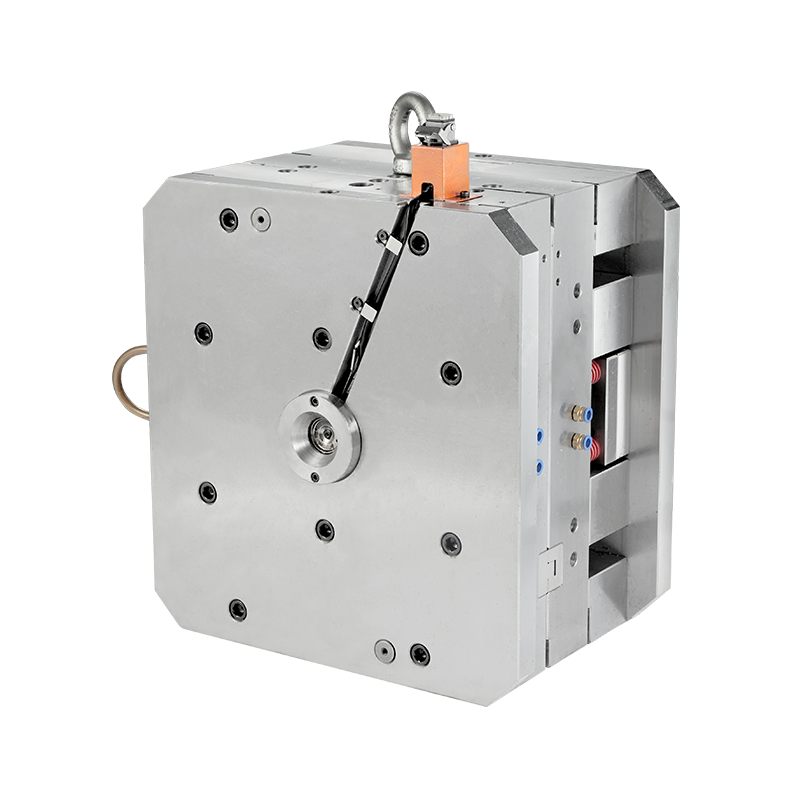
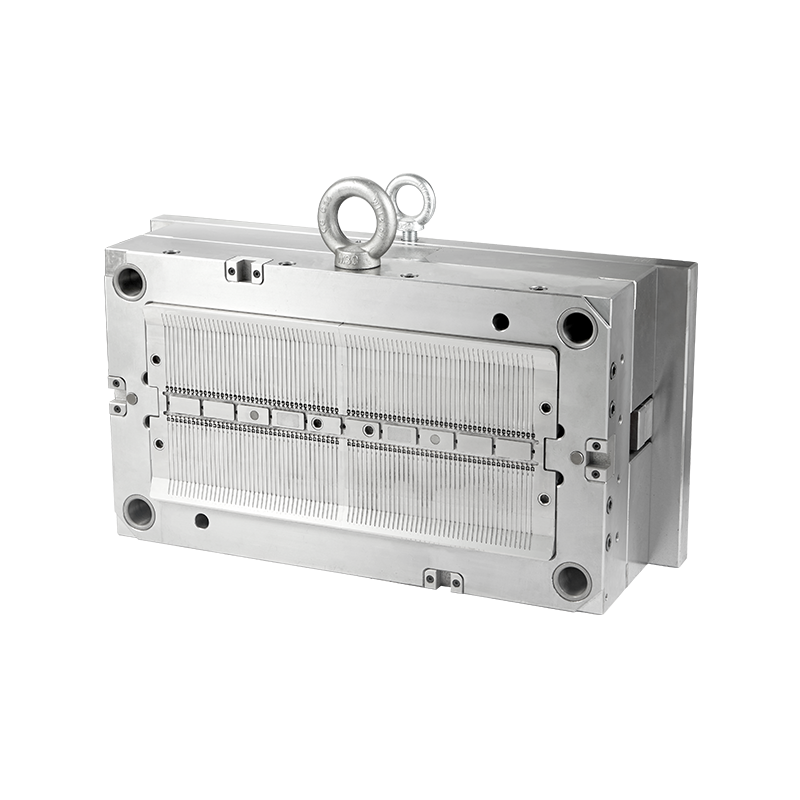
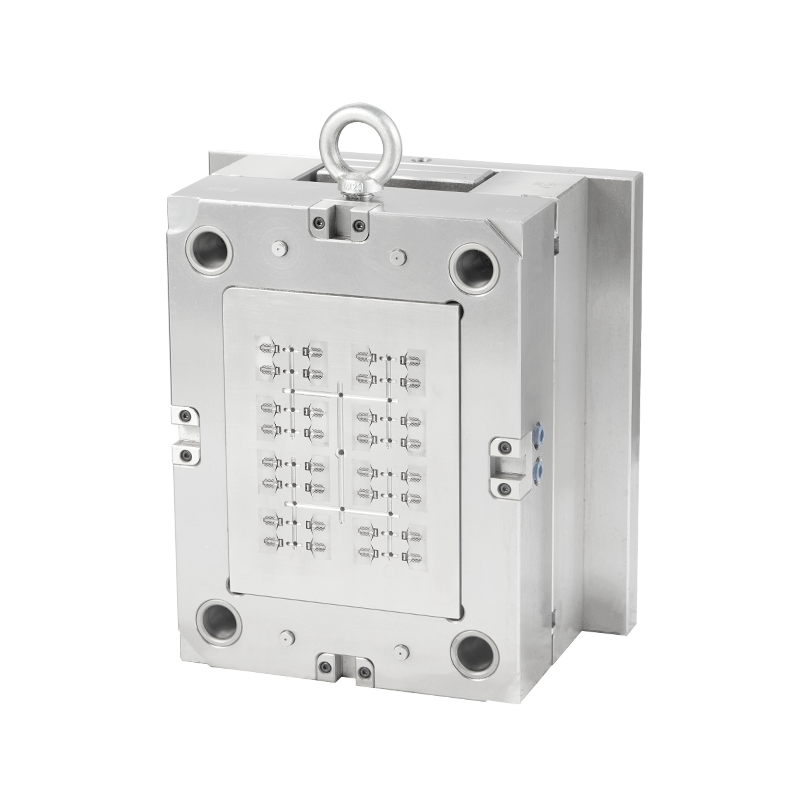
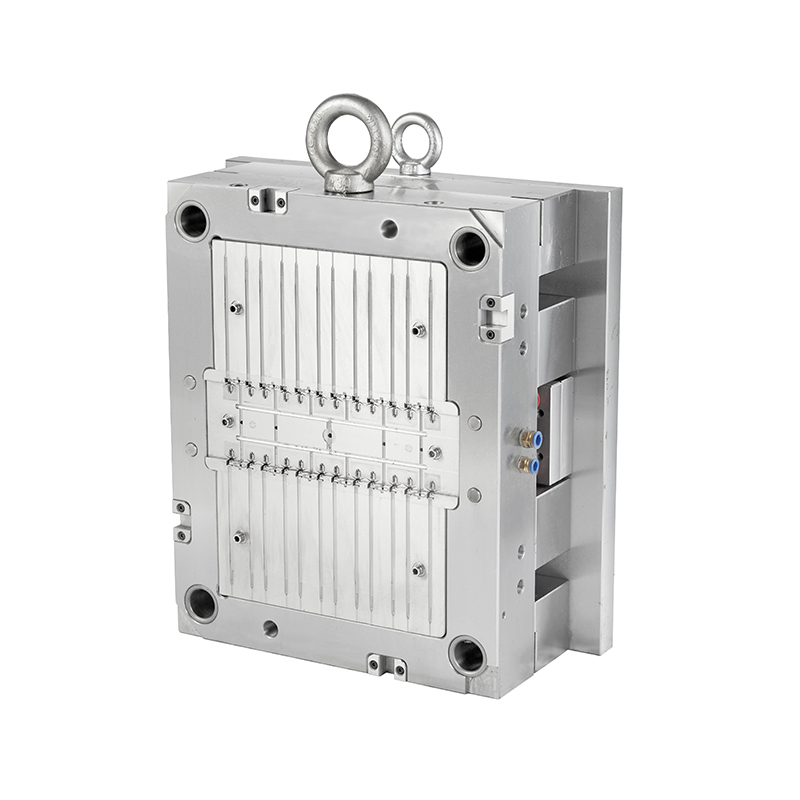
This makes a Nylon PA66 Cable Tie Injection Mold different from tooling designed around materials with lower moisture sensitivity or different shrinkage characteristics. The mold needs to account for the relationship between material behavior and cable tie geometry.
PA66 is hygroscopic, meaning it absorbs moisture from the surrounding environment. Excess moisture can affect molding stability and the properties of the finished cable tie. Autodesk's PA66 processing guidance recommends drying exposed material, with vacuum drying suggested when moisture content exceeds 0.2%.
This characteristic affects mold development because the cavity cannot compensate for unstable material preparation. Dimensional targets, shrinkage calculations, and trial results are meaningful only when the resin condition is controlled.
PA66 is a semi-crystalline engineering thermoplastic, so its shrinkage needs to be considered during mold development. Autodesk lists a shrinkage range of approximately 1–2% for PA66, while also noting that shrinkage can differ significantly between the flow and cross-flow directions.
| PA66 Characteristic | Approximate Reference | Mold Design Implication |
| Melt temperature | 260–290°C | Runner and gate design must support high-temperature processing |
| Mold temperature | About 80°C | Cooling and crystallization need controlled conditions |
| Injection pressure | 75–125 MPa | Cavity and mold structure need suitable pressure resistance |
| Unfilled shrinkage | About 1–2% | Cavity dimensions require shrinkage compensation |
These figures are general processing references rather than fixed specifications for every PA66 grade. The actual resin datasheet and cable tie geometry should determine the final tooling parameters.
A cable tie combines a thin strap with a thicker locking head. The difference in section thickness creates different cooling and crystallization conditions.
Published cable tie molding research describes ties with approximately 1.3 mm thickness and 4.7 mm width, demonstrating how relatively long, narrow cavities can require carefully controlled PA66 filling conditions.
PA66 has relatively low viscosity and can fill thin sections, but its viscosity is sensitive to temperature. Autodesk also notes that PA66 has fast gate freeze-off characteristics, making gate location and aperture important during mold design.
For a Nylon PA66 Cable Tie Injection Mold, the gate therefore needs to support adequate filling of the long strap while avoiding unnecessary pressure differences between the locking head and strap.
| Gate Consideration | Why It Matters |
| Gate location | Controls the direction and distance of melt flow |
| Gate opening | Influences filling resistance and freeze-off |
| Runner diameter | Affects pressure loss through the distribution system |
| Flow length | Important for long cable tie cavities |
Glass-filled PA66 changes the design equation again. Glass fibers can reduce overall shrinkage, but they can also create directional shrinkage because the fibers tend to orient with melt flow. Autodesk reports that reinforcing glass fibers can reduce PA66 shrinkage to roughly 0.2–1%, while differential shrinkage remains an important consideration.
Fiber-filled nylon can also increase mold-component wear. Current tooling references for glass-filled PA66 commonly recommend hardened mold materials or wear-resistant components for areas exposed to repeated abrasive flow.
PA66 crystallinity is affected by mold temperature, and crystallinity influences physical properties and dimensional behavior. Autodesk suggests approximately 80°C as a reference mold temperature and notes that thin-wall parts can require particular attention to crystallization and dimensional stability.
This is particularly relevant to cable ties because the strap is relatively thin while the head contains more complex geometry. A Nylon PA66 Cable Tie Injection Mold therefore needs cooling channels positioned to maintain reasonably consistent thermal conditions across different sections of the cavity.
Cable ties can have lengths ranging from compact versions for electronics to long ties designed for larger cable bundles. A long, narrow cavity creates a substantial flow path compared with the thickness of the strap.
Published PA66 cable tie molding research has documented 14-inch cable tie cavities and injection pressures around 1,700 ± 50 barg under a specific experimental setup, illustrating how resin grade, cavity length, and processing conditions can interact. These values should not be treated as universal production settings.
PA66's material characteristics can influence several tooling decisions at the same time.
PA66 does change the way cable tie molds need to be considered. Moisture sensitivity affects material preparation, crystallinity affects thermal management, shrinkage affects cavity dimensions, and flow behavior influences runner and gate design.
A Nylon PA66 Cable Tie Injection Mold therefore needs to be developed around both the cable tie geometry and the selected PA66 grade. A 200 mm × 2.5 mm tie, a 300 mm × 4.8 mm heavy-duty tie, and a glass-filled specialty tie may require different tooling considerations even though they share the same basic cable tie concept.
The key point is simple: PA66 is not merely the plastic placed into the mold. Its processing behavior becomes part of the mold-design equation.
Recommended Products



 English
 中文简体
中文简体 русский